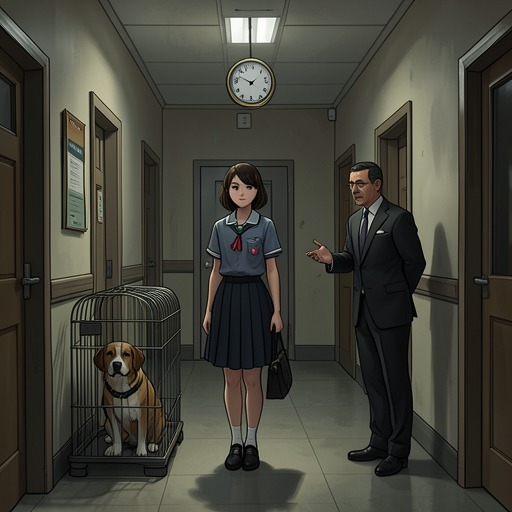
CJ Is Arrested in the High School Art Department Theft
A Dog's JourneyCJ’s arrest in connection with a high-school art-department break-in turns a request from Shane into a police investigation with consequences for her education and freedom. The sequence links her reluctant cooperation with Shane’s use of the key, her insistence that he was responsible, and the penalties she later describes: juvenile detention, academic suspension, and community service training service dogs.
The Key and Shane’s Request
Shane arrives at CJ’s home with Kyle and asks whether she has the key. CJ begins to object, but Shane presses his case: he and Kyle want to pass their art history midterms, regard the subject as a joke, and plan to make a copy of the test before leaving. His appeal makes the request sound temporary and practical, even as CJ recognizes the danger. She hands something to Shane, who tosses it to Kyle; Kyle promises to bring it straight back. Shane later returns and drops something on the table with a metallic ring, announcing that they are out.
CJ does not welcome the arrangement. She tells Shane that she could be expelled and is already on academic probation, but he proceeds with the plan. The exchange establishes the immediate risk before the break-in becomes known: CJ’s participation is not presented as enthusiasm for the scheme, but she does supply the item Shane requests. The later police inquiry gives that act a much larger consequence than the brief promise to return it suggests.
Police Come to the House
A few days later, two police officers arrive while CJ and Gloria are watching television and Molly is asleep. Molly initially expects a visitor to be Trent, then recognizes the officers by their dark clothes and the metal objects on their belts. CJ lets them into the house, where Gloria stands up to meet them. One officer asks CJ whether she is Clarity Mahoney, and the officers explain that they are there about a break-in at the high school’s art department. They specify what was taken: a laptop computer, some cash, and a silver picture frame.
The accusation catches CJ off guard. She denies that she did it, and Gloria immediately demands to know what she has done. CJ answers that Shane was responsible. The officer nevertheless says that CJ must come with them to the station. Gloria objects that her daughter is not going anywhere, but the police officer takes out handcuffs and tells CJ to turn around. CJ corrects the officer’s use of her formal name, saying that she goes by CJ. The correction does not halt the arrest: the officers take her away.
The scene’s turn is from a private request between teenagers to an official inquiry into stolen property. Shane’s plan had been framed as copying a test, but the police arrive investigating a break-in with several listed items missing. The evidence establishes that CJ identifies Shane as the person responsible; it does not describe a trial or establish the full circumstances of the theft. The arrest nonetheless places CJ in custody, despite her denial and Gloria’s protest.
The Empty House and Juvenile Detention
After the officers leave, CJ does not pet Molly before departing. Molly’s response is immediate and personal: she feels like a bad dog, then finds the house empty and alone. She retreats to her pillow in the basement, seeking a safe place. When she hears the front door open again, she stays downstairs because she can tell that Gloria has returned without CJ. The dog’s perception gives the arrest a domestic aftermath distinct from its legal one: CJ’s sudden absence is registered through a missed gesture and the changed quiet of the house.
CJ later tells Trent that juvenile detention was strange, though she says it was not especially horrible. She reports losing about four and a quarter pounds there. The girls could hear the boys on the other side, and, in her account, many of the girls had gotten into trouble by doing something for their boyfriends. Trent quietly points out the parallel with her own case. CJ’s explanation thus places her arrest within a pattern she observes among the other girls, while his brief response connects that pattern to the way Shane’s request involved her in his plan.
Academic and Personal Consequences
CJ says that, because she was already on academic probation, she is now on academic suspension for the semester. She describes the paperwork as extensive, comparing her file to one even international spies might envy. The consequences reach beyond the time in detention: she will not graduate with the usual ceremony, instead planning to graduate mid-year without pomp. CJ says that this is worth it because Gloria will not be able to sit among the parents and draw attention to herself when CJ’s name is called. Her remark shifts the account from institutional penalties to the strained relationship between mother and daughter; even while facing a setback, CJ measures part of its value by its effect on Gloria.
Community service is another consequence, but CJ chooses what she considers the coolest option: training dogs, specifically service dogs. When she says the word dog, Molly looks up. CJ pets her and calls her a good dog, a small act of affection following the arrest’s defining moment of separation. The episode therefore ends not with a report of a court verdict, but with the consequences CJ describes and a new activity she has chosen. Her service work will involve training dogs, while Molly’s presence turns the word into a personal connection as well as the name of an assignment.